Owning an e-bike is a little different from owning a regular bike. The motor and battery add real weight and real power, and that means your chain, brakes, and tires wear out faster than they would on a bike you pedal all on your own.
If you’re shopping for your first e-bike, knowing this now can help you pick a bike you’ll actually enjoy owning. If you already have one, this gives you a e-bike maintenance schedule you can trust instead of guessing.
Here’s the quick-answer version — the schedule most riders can just follow:
| Component | Check It | Service or Replace | Watch For |
| Chain | Wipe and lube every 100–150 miles | Replace every 1,000–2,000 miles | Rust, stiff links, skipping under power |
| Brakes (pads) | Check monthly or every 500 miles | Replace every 750–1,500 miles | Squealing, longer stopping distance, pad under 1.5mm |
| Battery | Check charge level every ride | Full care check every 6 months; most need replacing at 3–5 years or 500–1,000 charge cycles | Shorter range, slow charging, won’t hold a charge |
| Motor | Listen for noise every ride | Hub: only if something’s wrong; Mid-drive: check every 1,000 miles or once a year | Grinding, whining, sudden loss of power |
| Tires | Check pressure weekly | Replace every 1,500–3,000 miles or every 2–3 years | Cracked sidewalls, bald center tread, frequent flats |
Why E-Bikes Need More Attention Than a Regular Bike
A regular bike only has to deal with your own leg power. An e-bike adds motor torque on top of that, especially when you take off from a stop. That extra force wears the chain and brakes down quicker than on what works for a regular road bike.
E-bikes also tend to get ridden more, since people use them for actual errands and commutes instead of just weekend fun. More miles means more wear, plain and simple.
Chain and Drivetrain: How Often to Clean, Lube, and Replace
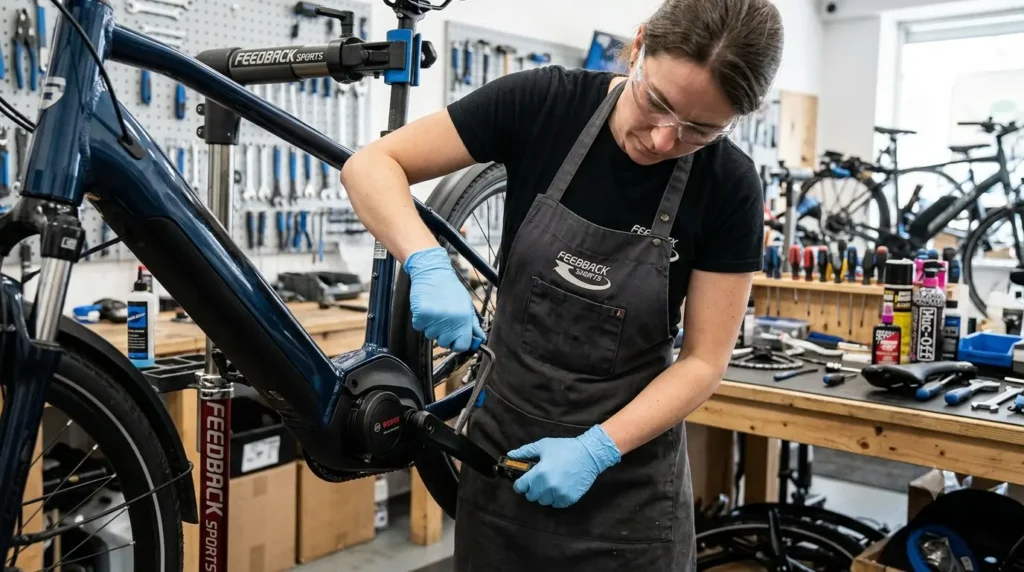
Your chain does the hardest job on the bike. Wipe it down and add a drop of lube every 100 to 150 miles, then wipe off the extra so it doesn’t turn into a grime magnet.
Most e-bike chains need replacing somewhere between 1,000 and 2,000 miles, though a cheap chain checker tool is more accurate than counting miles alone. A dry, worn chain is one of the most common reasons behind that annoying squeak while pedaling.
When it’s finally time for a new one, look for a chain rated for the extra torque an e-bike puts out.
Brakes: How Often to Check and Replace Pads
Your e-bike is heavier and often faster than a regular bike, so it needs stronger, more reliable stopping power. Check your pads monthly or every 500 miles, and replace them when they squeal, when stopping distances get longer, or when you can see less than 1.5mm of pad material left.
Most riders land somewhere between 750 and 1,500 miles before a swap, sooner if you ride hills or carry cargo. Keeping a solid set of replacement pads on hand means you’re never stuck waiting on a part.
Battery: How Often to Check, Charge, and Replace
Your battery doesn’t wear out on a mileage schedule the way mechanical parts do. It ages with time and with charge cycles. Check the charge level before every ride, and give it a fuller check every 6 months — connections, terminals, and how well it’s holding a charge.
Most e-bike batteries last 3 to 5 years or 500 to 1,000 full charge cycles before range starts dropping off noticeably. If yours seems off, work through the basics before assuming the worst, since a loose connection or a cold garage can mimic a dying battery. It also helps to know roughly how long a healthy battery should last so you can spot real decline early.
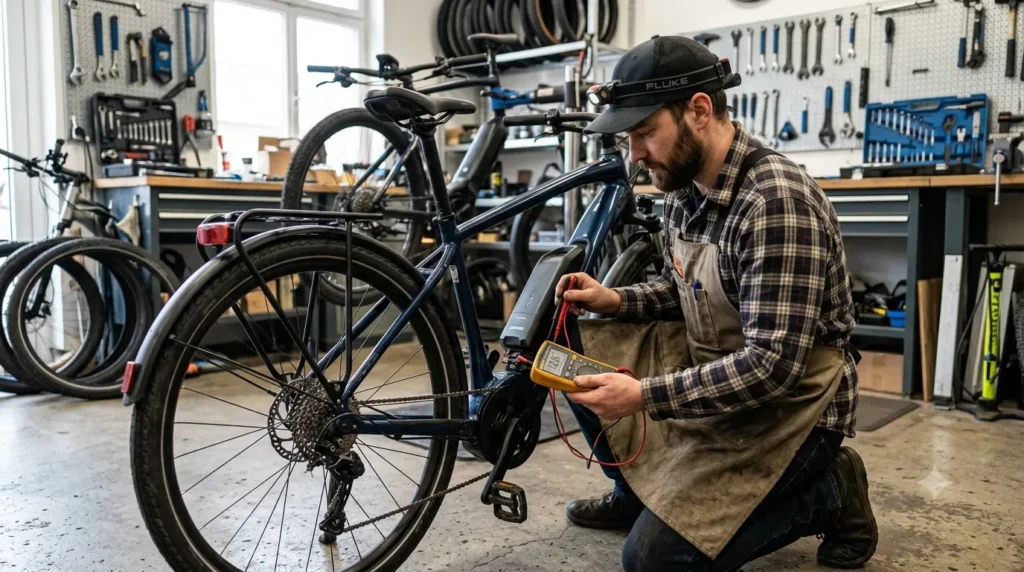
From the repair bench: The bike that scares people the most is the one that suddenly won’t power up. Nine times out of ten, when a rider brings one in convinced the motor died, the real problem is a battery that’s been sitting at 10% in a cold garage for three weeks. A five-minute charge check saves more shop visits than almost anything else on this list.
Motor: How Often It Actually Needs Service
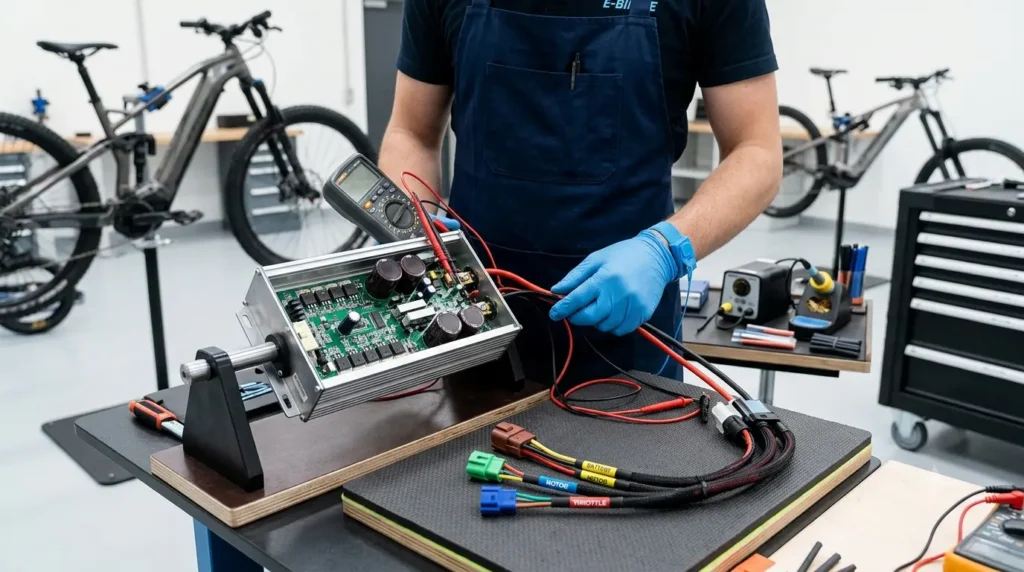
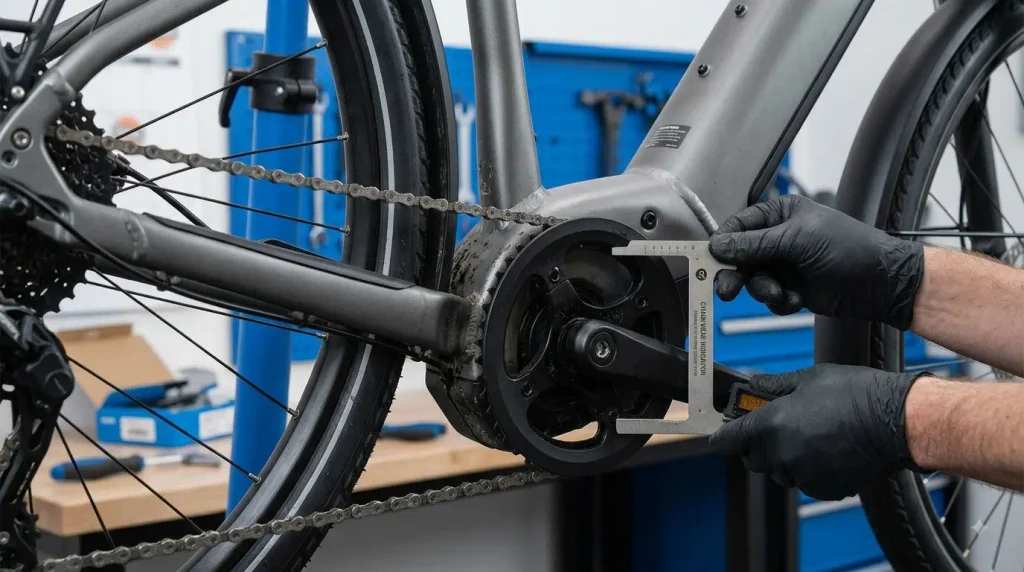
This depends a lot on what kind of motor you have. Hub motors are sealed and mostly maintenance-free — a listen and a wipe-down at each tune-up is usually enough, and they only need real attention if something sounds wrong. Mid-drive motors sit closer to the chain and gears, so they take more stress and benefit from a check every 1,000 miles or once a year. If your power delivery feels jumpy or cuts out, common controller issues are worth ruling out first, since the controller and motor work as a team. It’s also worth knowing how your bike behaves without pedaling if you rely on throttle mode often.
Tires: How Often to Check Pressure and Replace
Tires are your only contact with the road, so this one matters more than people think. Check pressure at least once a week with a real gauge instead of a thumb squeeze, since e-bike tires lose air even when parked. Replace tires every 1,500 to 3,000 miles, or every 2 to 3 years regardless of mileage, since rubber hardens and cracks with age even if the tread still looks okay.
A Simple Rhythm You Can Actually Stick To
- Every ride: tire pressure glance, brake squeeze, battery charge check
- Every week: proper tire pressure check with a gauge
- Every 100–150 miles: chain wipe and lube
- Every month: brake pad look, quick full-bike inspection
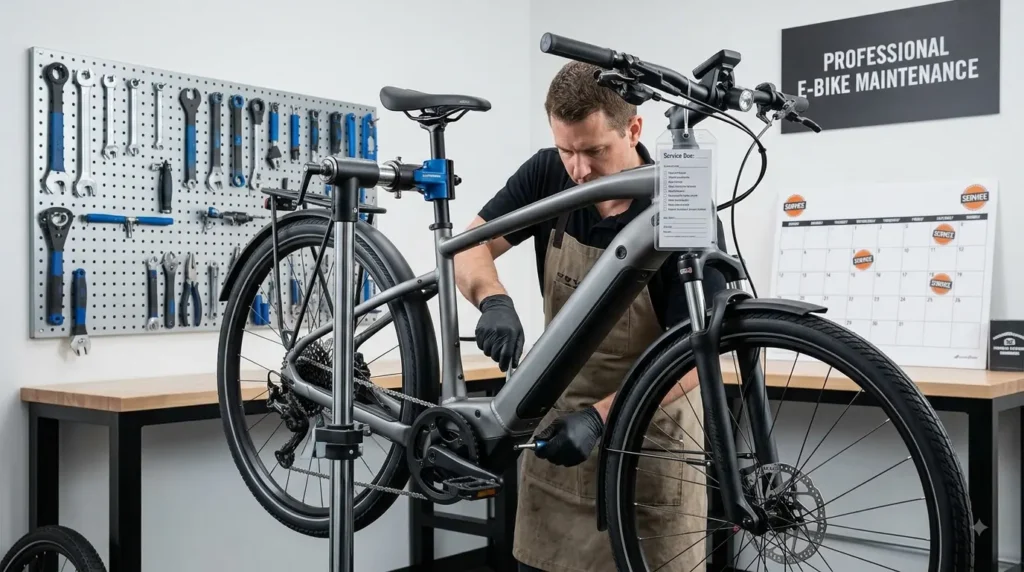
- Every 6 months: full tune-up — brakes, chain, battery health, motor listen-test
- Once a year: deeper service, especially before your main riding season starts
How Your Riding Style Changes This Schedule
These numbers are a starting point, not a rule carved in stone. Daily commuters and hill climbers should move everything up — think every 3 to 4 months instead of 6. Cargo riders and heavier loads wear brakes and chains faster too. Weekend-only, flat-terrain riders can often stretch these intervals out. If you’re still deciding what actually matters when comparing models, it’s worth picking a bike that matches how much maintenance you’re realistically willing to do.
What It Costs to Keep Up With
A basic professional tune-up typically runs $50 to $150. A deeper annual overhaul, with worn parts replaced, usually falls between $250 and $400. Doing your own chain lube and pressure checks at home is nearly free and stretches the time between paid visits considerably.
Signs Your E-Bike Needs Attention Right Now
Regardless of schedule, don’t ignore: grinding or clicking noises, brakes that feel weak or spongy, sudden loss of power, or a battery that drains far faster than usual. Unusual noise from the wheels themselves often points to bearings needing fresh grease rather than anything more serious.
Frequently Asked Questions
How often should I service my e-bike?
Every 6 months or every 1,000 miles, whichever comes first. Daily riders or hill climbers should move that up to every 3–4 months.
How often should I lube my e-bike chain?
Every 100–150 miles, or sooner if it looks dry or sounds noisy. Wipe off the extra so it doesn’t collect grit.
How often should I check my e-bike’s tire pressure?
At least once a week. Tires lose air even sitting still, and low pressure wears them out faster.
Do e-bike motors need regular maintenance?
Hub motors barely need anything beyond a listen and a wipe-down. Mid-drive motors take more drivetrain stress, so check them every 1,000 miles or so.
How do I know my e-bike brakes need new pads?
Squealing, a spongy lever, or longer stopping distances are the big three. Under 1.5mm of visible pad means it’s time to swap.
Stick this schedule to your garage wall or save it to your phone. Follow it, and small $20 fixes stay small instead of turning into $400 ones.