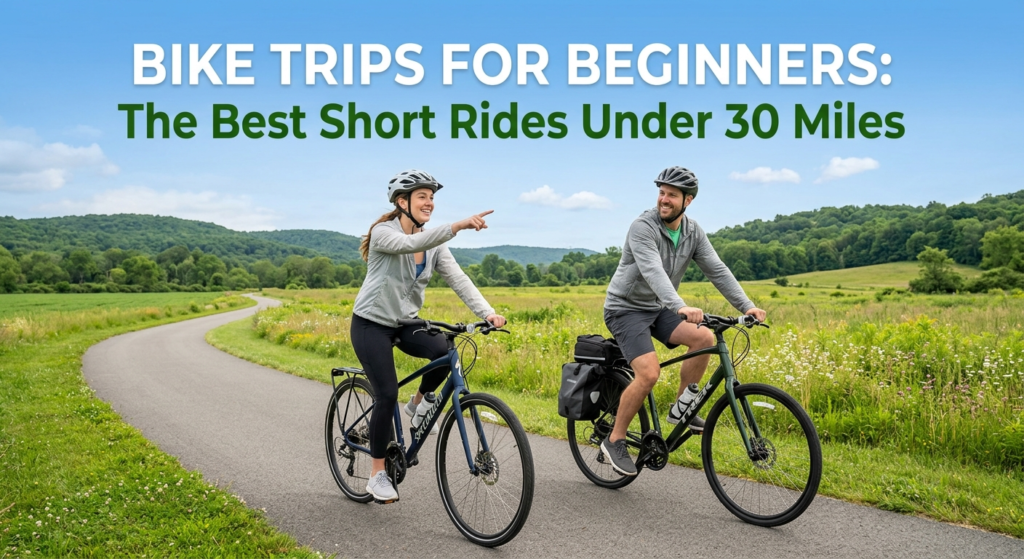
You don’t need two weeks of vacation time or a bike loaded down with gear to go on a real bike trip. Some of the best rides are the short ones. A few hours. Under 30 miles. Home in time for dinner.
That’s good news, because cycling has been growing steadily more popular for years now, and most new riders don’t want a multi-day trip through the mountains for their first outing. The best bike trips for beginners are usually the simple ones: a ride that feels like an adventure but doesn’t ask too much of your legs, lungs, or bike-handling skills.
This guide skips the far-off destinations you’ve never heard of. Instead, it focuses on something more useful: the types of short cycling trips for beginners that work best, how to plan one from start to finish, and what to pack so your first outing feels fun instead of stressful.
What Makes a Bike Trip Beginner-Friendly?
Not every short ride is a good first ride. A beginner-friendly trip has a few things in common, no matter where you find it.
- Flat or gently rolling ground. Hills wear out new leg muscles fast. A route with small, easy rises beats one with steep climbs, even short ones.
- A smooth, predictable surface. Pavement or hard-packed gravel is easier to handle than loose sand or rocky trail. You can focus on pedaling instead of dodging potholes.
- Low traffic, or none at all. A path just for bikes and walkers lets you relax. You won’t have to watch for cars while you’re still getting used to steering and braking.
- Clear signs and easy navigation. Getting lost is stressful on any ride. The best beginner routes are well marked, so you always know which way to go.
- Somewhere to stop. A bench, a water fountain, a small town with a coffee shop. These little breaks make a big difference on your first few rides.
How Far Should a Beginner Really Ride?
This is the question almost every new cyclist asks. The honest answer: it depends on you, but most beginners feel great starting around 5 to 15 miles.
That’s why “under 30 miles” is the right ceiling for this guide, not a target you need to hit right away. Thirty miles is plenty of room to grow into. Your first short cycling trip might be 8 miles. Your fifth might be 25. Both count.
A few things help:
- Plan by time, not just distance. If you ride out for 45 minutes, you know you have a 45-minute ride back. That’s easier to manage than guessing at mileage.
- Build up slowly. Adding a few miles every week or two beats jumping from 5 miles to 25 in one trip.
- Rest stops count as part of the plan, not a sign you’re falling behind.
If you’re riding an e-bike, you can usually go farther with less effort, since the motor helps you handle hills and headwinds. But even then, it’s smart to ease into longer rides instead of maxing out your first trip.
The Best Types of Short Bike Trips for Beginners
You don’t have to guess where to ride. A few types of routes are almost always beginner-friendly, no matter what state or city you live in. Here’s what to look for.
Rail Trails
Rail trails are old train routes that have been paved or covered in crushed stone for bikes and walkers. Trains can’t climb steep hills, so the tracks they once ran on are almost always flat or very gently sloped. That makes old railway lines some of the easiest bike touring routes you’ll find anywhere.
Most rail trails have mile markers, so it’s easy to track your progress and turn around at exactly the halfway point. Many pass through small towns, which means bathrooms, snacks, and water are usually close by. If you only try one type of trip from this list, a rail trail is a safe bet.
Coastal and Waterfront Routes
A ride along the water is hard to beat for scenery, and coastal paths are often flat by nature. Ocean towns, lakefronts, and riverwalks tend to build their bike paths along the shoreline, where the land is naturally level.
The one thing to plan for is wind. Open water means open wind, and a headwind on the way back can turn an easy ride into a tiring one. Check the forecast, and if you can, plan your route so the wind is behind you on the second half.
If your route includes any actual beach or sand, a wider, lower-pressure tire makes a real difference in how much control you have. Regular road tires tend to sink and slide.
Lake Loops
A loop around a lake gives you something rail trails and coastal routes don’t always offer: a route that brings you right back to where you started, with no need to double back the way you came. That makes lake loops feel like a full trip, even at a short distance.
Because they follow the shoreline, lake loops are usually flat, and many are fully paved. They’re also easy to shorten. If the full loop looks too long, you can often cut across on a side road and turn a big loop into a smaller one.
Greenways and Multi-Use Paths
Almost every city and midsize town has some version of this: a paved path that connects parks, neighborhoods, and shopping areas, built just for bikes and walkers. These are some of the most convenient easy bike touring routes around, because you don’t have to drive anywhere to start. You just ride from your front door.
Greenways are great for a first attempt at a longer ride because you’re never far from home. If you get tired, sore, or the weather turns, you can bail out and be back in your driveway in minutes.
Park and Preserve Loops
Many state and county parks have paved or gravel loop trails built for casual riders, not just hikers. These tend to be shorter than rail trails or lake loops, often 2 to 10 miles, which makes them a gentle way to test your legs before committing to a longer trip.
They’re also a good pick if you want scenery without any traffic at all, since most parks close their loop trails to cars entirely.
How to Choose Your First Route
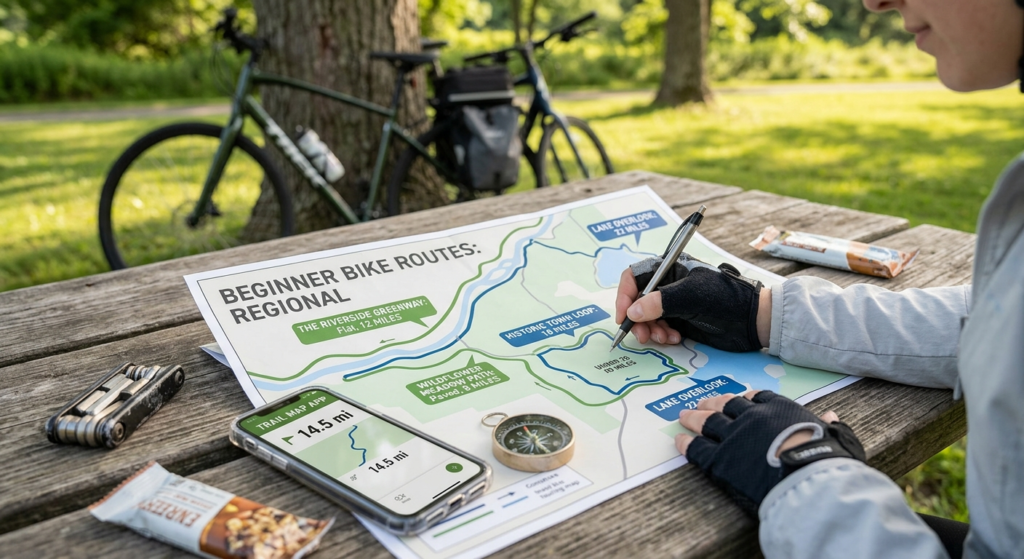
Once you know the type of trip you want, a few tools make picking an actual route easy. Trail-mapping apps and sites, things like RideWithGPS, TrailLink, Komoot, or AllTrails, let you search by distance, surface type, and difficulty. Most show recent reviews, so you can check if a trail is washed out, under construction, or crowded before you go.
A few things worth checking before you commit:
- Surface type. Paved is easiest. Crushed stone or hard-packed dirt is still manageable. Loose gravel or sand takes more skill.
- Elevation profile. A flat line on the elevation chart means a flat ride. Look for anything under a couple hundred feet of total climbing for your first few trips.
- Route shape. An out-and-back route is easiest for beginners because you can turn around anytime. A loop feels more adventurous but commits you to finishing. A point-to-point route needs a plan for getting back to your car or home.
When in doubt, pick the out-and-back. There’s no shame in riding 6 miles out, deciding that’s enough, and heading home for a 12-mile day instead of the 20 you planned.
Do You Need a Special Bike?
Not really. Most beginner-friendly trips can be ridden on whatever bike you already own, as long as it’s in good working order. A hybrid or comfort bike, with a more upright seating position and slightly wider tires, is the most forgiving option if you’re buying new.
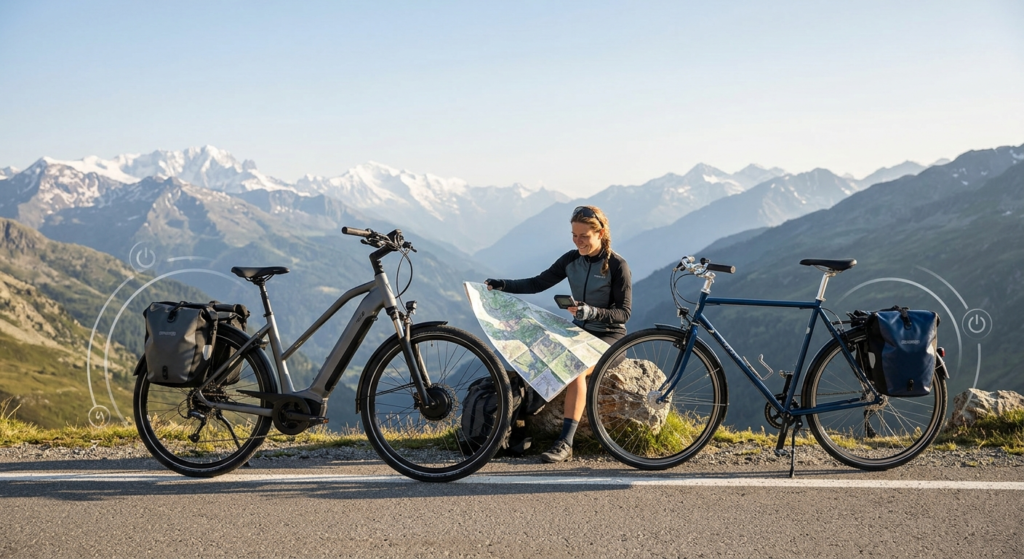
E-bikes have also made short trips more approachable for a lot of new riders. The pedal-assist motor takes the edge off hills and headwinds, which means you can go a little farther, a little more comfortably, especially useful if you’re not confident in your fitness yet. You don’t need one to enjoy a short bike trip, but it can lower the bar for a first-timer who’s on the fence about whether cycling is for them.
Get Your Bike Ready Before You Go
A short ride can turn into a long walk home if your bike isn’t ready. A quick check before you head out saves you from most common problems.
Go through this list the night before or morning of your ride:
- Tires. Check the pressure and look for cracks or embedded debris. Soft tires make pedaling harder and raise your flat risk.
- Brakes. Squeeze both levers. The bike should stop smoothly, without grinding or pulling to one side.
- Chain. It should look lightly oiled, not dry or rusty. A dry chain skips and wears out faster.
- Bolts. Wheels, seat, and handlebars should all be locked in tight, with nothing wiggling.
From the repair bench
The most common issue we see with bikes that have been sitting all winter isn’t the big stuff. It’s the small stuff: dry chains, soft tires, and brake pads that have hardened from sitting unused. None of it takes more than 10 minutes to fix, but all of it can end a short trip early if it’s ignored. A basic tune-up before your first ride of the season is worth the trip to the shop.
Beyond the bike, think about your own comfort too. Padded shorts help on rides over an hour. Sunscreen and a hat matter more than people expect, especially on open coastal or lake routes with no shade.
What to Pack for a Short Bike Trip
You don’t need a full touring setup for a ride under 30 miles, but a few basics keep a small problem from turning into a big one.
- Water. More than you think you’ll need, especially in warm weather.
- Snacks. A granola bar or piece of fruit keeps your energy steady.
- A spare tube, tire levers, and a mini pump. Flats happen, even on easy trails.
- A multi-tool. Covers loose bolts and minor adjustments.
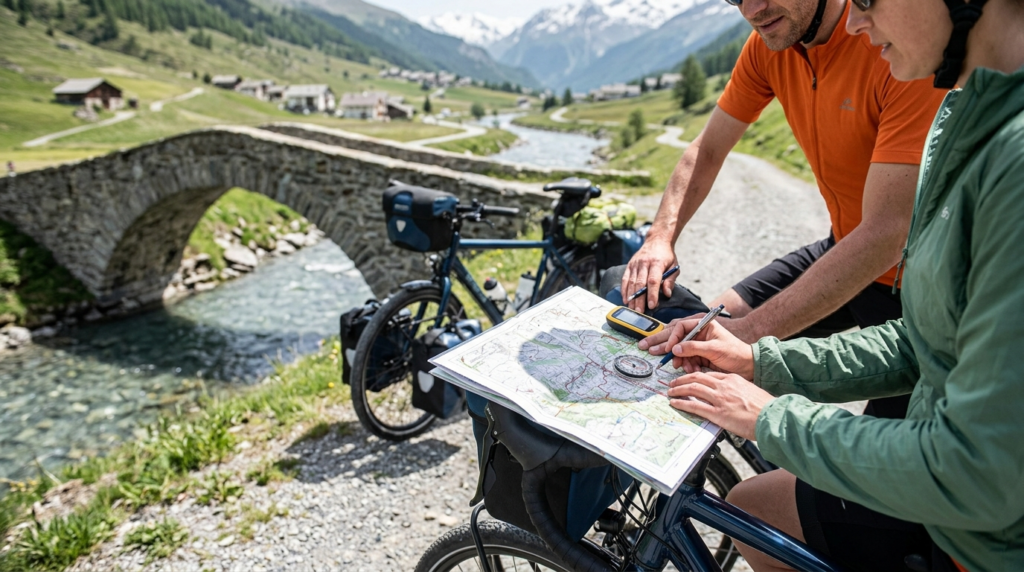
- Your phone, charged, with the route saved for offline use in case you lose signal.
- Sunscreen, sunglasses, and a light layer in case the weather shifts.
- A little cash or a card, in case you pass a small shop or café along the way.
That’s it. You’re not packing for a week away. You’re packing for a few hours outdoors, with a plan for the small things that could go wrong.
Know the Rules Before You Roll
Every trail has its own etiquette, but a few rules show up almost everywhere:
- Pass on the left, and call out “on your left” before you do.
- Yield to walkers, runners, and horses if the trail allows them.
- Ride single file on narrow sections or when other trail users are nearby.
- Use hand signals when you turn, especially if your route crosses any roads.
If you’re riding an e-bike, double check that your trail allows it. Some rail trails and park loops only allow certain classes of e-bike, or none at all.
If any part of your trip touches public roads, you’re considered a vehicle in most states, which means you’re expected to follow traffic signals and ride with the flow of traffic, not against it. Helmet rules and other requirements vary depending on where you live, so it’s worth a quick check if you’re riding somewhere new.
Common Mistakes First-Time Riders Make
A few small mistakes trip up a lot of new cyclists. Knowing about them ahead of time helps you skip the learning curve.
- Starting too far, too fast. It’s tempting to plan the full 30 miles right out of the gate. Most people enjoy their first trip more at half that distance.
- Skipping the bike check. A five-minute look at your tires and brakes prevents most of the problems that end a ride early.
- Not bringing enough water. This catches people off guard even on short trips, especially in the heat.
- Ignoring the wind. A flat route can still feel hard if you’re riding into a headwind the whole way home. Check the forecast and plan your direction around it when you can.
- Riding with the wrong tire pressure. Too soft and you’ll work harder than you need to. Too hard and every bump in the trail rattles up through your hands and seat.
Frequently Asked Questions
How far should a beginner cyclist ride on their first trip?
Most beginners feel comfortable starting between 5 and 15 miles. You can work up to 30 miles over several trips as your fitness and confidence build.
What’s the easiest type of bike trail for a first-timer?
Rail trails are usually the easiest option. They’re flat, well marked, and often paved or covered in hard-packed crushed stone.
Do I need a special bike for a short bike trip?
No. Most beginner routes can be ridden on any working bike. A hybrid, comfort bike, or e-bike makes things a little easier, but none of them are required.
How do I find beginner-friendly bike trails near me?
Trail-mapping apps let you filter by distance, surface, and difficulty, and usually show recent rider reviews so you know current conditions before you go.
Is 30 miles too far for a beginner’s first ride?
It can be, depending on your fitness level. Thirty miles works better as a goal to build toward over a few outings than a target for your very first trip.
The Best First Step Is a Short One
You don’t need a bucket-list destination to have a great bike trip. A flat rail trail twenty minutes from home. A loop around your local lake. A ride along the coast with the wind at your back. These short trips are where most great cyclists actually start.
Pick a route type that matches what you have nearby. Give your bike a quick check. Pack light, plan for water and a possible flat tire, and don’t feel pressured to hit 30 miles on day one. The whole point of a short bike trip is that it fits into a normal day, and leaves you looking forward to the next one.