
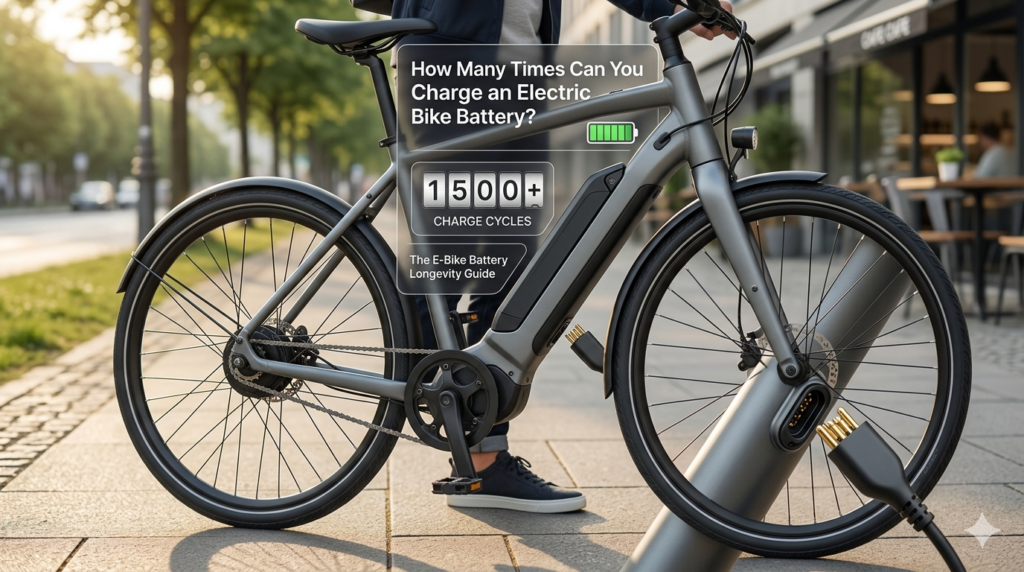
If you just bought an e-bike, or you’re about to, this question has probably crossed your mind: how many times can you actually charge this battery before it wears out? It’s a smart thing to ask. Batteries aren’t cheap, and nobody wants a surprise bill down the road.
Here’s the short answer. Most e-bike batteries can handle somewhere between 500 and 1,200 charge cycles before they start losing real power. Well-built batteries, charged the right way, can push past 1,500. That works out to roughly 3 to 7 years of normal riding for most people.
But that number isn’t carved in stone. How you charge your battery changes the outcome a lot. Let’s break down what a “charge cycle” really means, what speeds up wear, and how to get more rides out of the battery you already have.
What Does a “Charge Cycle” Actually Mean?
A charge cycle isn’t the same thing as plugging your bike in. One full cycle means you used 100% of the battery’s total capacity, whether that happened in one ride or across several short ones.
So if you ride down to 50% and recharge, then do that again the next day, those two half-drains add up to just one full cycle. This matters more than people realize. It means charging often does not burn through your battery’s life as fast as you’d think.
This is also why two people with the same e-bike can get very different results. A rider who drains the battery to almost zero before every charge puts more strain on it than someone who tops off at 40%.
How Many Times Can You Really Charge an E-Bike Battery?
The number depends mostly on what kind of battery sits inside your bike. Here’s how the three main types compare:
| Battery Type | Typical Charge Cycles | Rough Lifespan |
| Lithium-ion (most common today) | 500–1,200 | 3–7 years |
| Lead-acid (older or budget bikes) | 300–500 | 1–3 years |
| Nickel-metal hydride (NiMH) | 500–700 | 2–4 years |
Almost every modern e-bike runs on lithium-ion. That’s good news, since it’s the longest-lasting and most reliable option of the three. If you ever need to replace yours, it helps to know what a solid lithium-ion pack actually looks like before you buy, since quality varies a lot between brands.
Charging to 100% vs. 90% vs. 80%: How It Changes Your Cycle Count
This one surprises a lot of riders. How full you charge your battery each time has a direct effect on how many total charges you’ll get out of it.
| Charge Level | Typical Cycle Count | What You Trade Off |
| 100% every time | ~500–800 cycles | Most range per charge, shortest total life |
| 90% | ~800–1,000 cycles | Slightly less range, noticeably longer life |
| 80% | ~1,000–1,500+ cycles | A bit less range, the longest battery life |
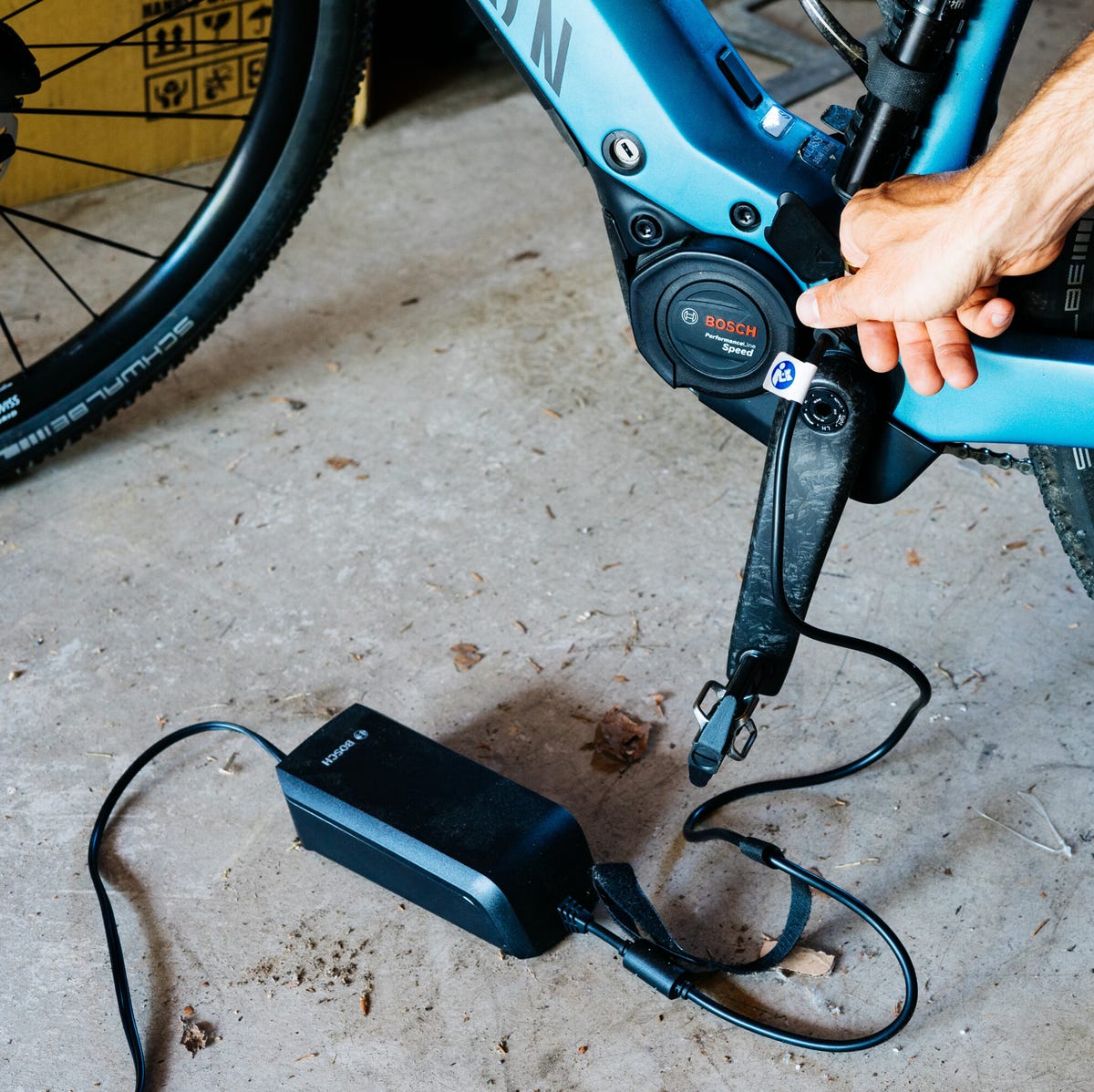
You don’t have to pick one number forever. Charge to 100% on days you need the extra miles, and stick closer to 80% the rest of the time. Small habit, big payoff.
Credit: www.bicycling.com
Cycles vs. Years: Which One Actually Decides When Your Battery Dies?
Here’s something most guides skip. Cycles and years don’t always move at the same speed.
A daily commuter might burn through 300 cycles in a single year. Someone who only rides on weekends might take five years to hit that same number. So your battery’s real lifespan depends on both how many cycles are left and how old it is.
Lithium-ion cells slowly break down over time, even sitting unused. Heat speeds this up. So does leaving a battery parked at 100% or 0% for weeks at a time. This is why two batteries with the exact same cycle count can perform very differently depending on their age and how they were stored.
What Shortens Your Battery’s Charge Life
A few habits quietly eat away at your total number of charges:
- Draining it to zero, often. Letting the battery hit 0% on a regular basis stresses the cells more than stopping at 20%.
- Charging to 100% every single time. It’s fine once in a while, but doing it constantly speeds up wear.
- Extreme heat or cold. A battery baking in a hot garage or freezing overnight loses cycles faster than one kept at room temperature.
- Mismatched chargers. Using a charger that doesn’t match your battery’s voltage can cause uneven charging and early damage.
- Wrong storage charge level. Parking your bike for weeks at full or empty wears down the cells even while it sits still.
Charging Habits That Add Hundreds of Extra Cycles
The good news is you can stretch your battery’s life with a few easy habits.
Keep your charge between 20% and 80% for everyday riding. This one habit, often called the 20/80 rule, can add hundreds of extra cycles over the battery’s life. Save full 100% charges for the days you genuinely need the range.
Charge after rides instead of letting the battery sit drained. Lithium-ion doesn’t have the old “memory effect” problem, so frequent partial charges are perfectly fine.
Charge and store your battery at room temperature when you can. Cold weather is rougher on batteries than most riders expect, so it’s worth knowing how winter conditions affect your battery before the temperature drops.
Stick with the charger that came with your bike, or one rated for the exact same voltage and amperage. And if you’re storing the bike for more than a couple weeks, charge it to around 50% first, not full and not empty.
Does Charging Every Day Hurt Your Battery?
No. This is one of the most common worries, and it’s based on old battery tech. Older nickel-cadmium batteries really did have a “memory effect” where partial charging shrank their usable capacity.
Lithium-ion doesn’t work that way. You can plug in after every ride, even short ones, without speeding up wear. Frequent shallow charges are usually gentler on the battery than waiting until it’s nearly dead.
How Many Miles Will You Get Before You Need a New Battery?
This is the number most riders actually want. Here’s a simple way to estimate it.
Take your battery’s expected cycle count and multiply it by your usual range per charge. So if your battery is rated for 800 cycles, and you typically get about 35 miles per charge, that comes out to roughly 28,000 miles of riding before the battery starts noticeably losing power.
Riders with shorter daily routes often get even more total mileage out of one battery, since lighter use puts less strain on the cells over time.
Signs Your Battery Is Running Low on Cycles
Even with great care, every battery wears down eventually. Watch for these signs:
- Your range drops noticeably, even on routes you know well
- The battery takes longer to charge than it used to
- Power feels weaker on hills or at higher speeds
- The battery feels warm just sitting on the charger
- It loses charge fast even when you’re not riding it
If your battery suddenly won’t charge at all, instead of slowly losing power, the issue might not be the battery itself. It’s worth ruling out a few common charging problems before assuming you need a full replacement.
What Happens When the Battery Runs Out of Cycles
Your e-bike won’t just stop working one day out of nowhere. Instead, the battery slowly holds less charge, until rides that once felt easy start to feel underpowered. At this stage, a battery nearing the end of its life usually still works — just with noticeably less range and punch than before.
Most riders replace the battery once it drops to around 70–80% of its original capacity. A new pack can run a few hundred dollars depending on size and brand, which is worth factoring into the full cost of owning an e-bike before you buy.
Quick Charging Cheat Sheet
- Charge between 20% and 80% for everyday riding
- Save 100% charges for long rides only
- Avoid letting the battery sit at 0%
- Charge and store at room temperature
- Use the manufacturer’s charger
- Store at around 50% if not riding for weeks
- Charge after rides, even short ones — it’s safe
Frequently Asked Questions
How many times can I charge my e-bike battery before it dies completely?
Most lithium-ion e-bike batteries handle 500 to 1,200 full charge cycles before losing significant power, though many keep working at a lower capacity well beyond that.
Is it bad to charge my e-bike every day?
No. Lithium-ion batteries don’t have a memory effect, so daily charging, even after short rides, is safe and often better than letting the battery run low.
Should I always charge my e-bike battery to 100%?
Not every time. Charging to around 80% for daily use can add hundreds of extra cycles to your battery’s life. Save full charges for days you need the extra range.
How long do e-bike batteries last in years?
Most last 3 to 5 years with regular use. Light riders who follow good charging habits can often stretch that to 7 years or more.
Can I leave my e-bike battery charging overnight?
Yes, in most cases. Modern e-bike chargers cut off automatically once the battery is full, so overnight charging won’t overcharge it. Just avoid leaving it plugged in for days at a time.
Final Thoughts
Your e-bike battery isn’t a ticking clock you have no control over. The number of times you can charge it depends a lot on how you treat it day to day. Keep it out of extreme heat, avoid running it to empty, and stay close to that 20–80% range when you can.
Do that, and you’ll likely get years of solid rides out of one battery, along with a charge count well above what the average rider gets.