You’ve probably seen them. Big, chunky tires. Wide frame. They look like they belong on the moon. And if you’ve ever stood next to one at a bike shop or spotted someone riding one on the beach, you’ve probably wondered: is a fat tire bike easier to ride?
It’s a fair question. And the answer is a little more nuanced than a simple yes or no.
Fat tire bikes are easier to ride in some situations. In others, they ask a bit more from you. But for the right rider, on the right terrain, they feel like riding on a cloud.
This guide breaks it all down for you. No fluff, no jargon. Just the real answer.
What Exactly Is a Fat Tire Bike?
Before we get into the ride quality, let’s get clear on what we’re talking about.
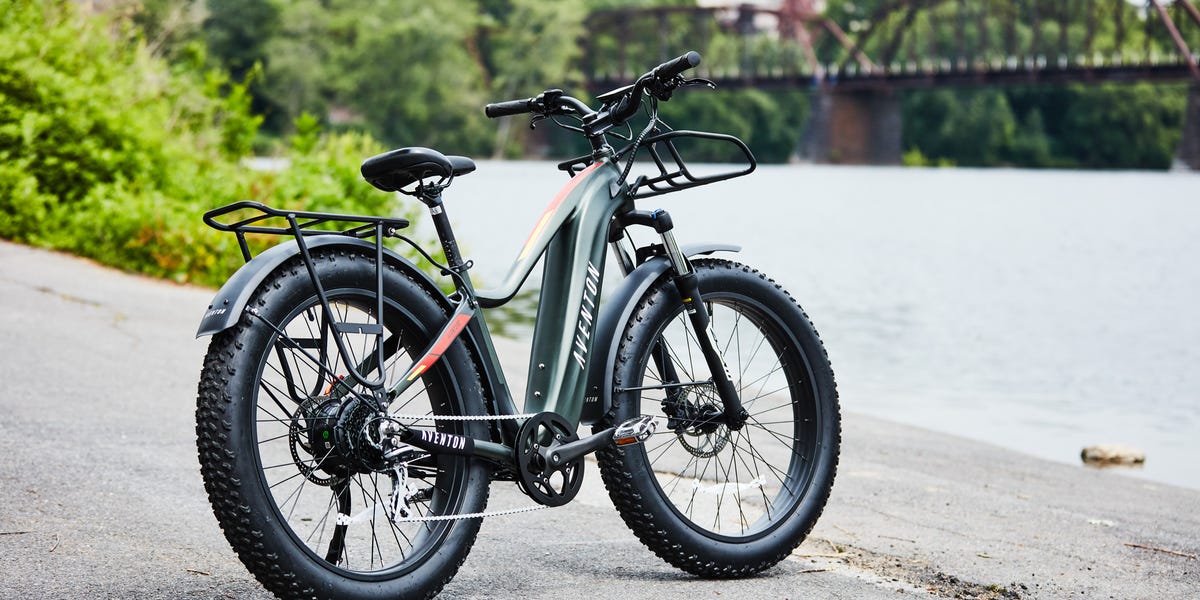
A fat tire bike is a bicycle with extra-wide tires. Most regular bike tires are between 1 and 2.5 inches wide. Fat tire bikes have tires that measure anywhere from 3.8 to 5 inches wide. That’s nearly double, sometimes triple, the size of a standard tire.
These bikes were originally built in the 1980s by cyclists in Alaska who needed something that could power through deep snow. The idea was simple: wider tires spread weight across a bigger area, so you don’t sink. Think of it like wearing snowshoes instead of regular boots.
In 2005, Surly Bikes released the Pugsley, the first fat tire bike sold in regular bike shops. Since then, these bikes have blown up in popularity, and for good reason.
If you’re curious about the full range of benefits of fat tires on a bicycle, there’s a lot more to love than just the wide profile.
So, Is a Fat Tire Bike Easier to Ride?
Here’s the short answer: yes, in most situations, especially for beginners and off-road riders.
Fat tire bikes are more stable, more forgiving, and more comfortable on rough terrain than regular bikes. The wide tires grip the ground better, absorb bumps naturally, and make it harder to lose your balance.
But they’re not magic. On smooth, flat pavement, they take a bit more effort to pedal. And they’re heavier than your average road or mountain bike.
So it really comes down to where and how you plan to ride.
Let’s dig into the details.
Why Fat Tire Bikes Feel More Stable
Stability is the biggest reason people find fat tire bikes easier to handle.
Here’s how it works. A wider tire creates a larger contact patch with the ground. More rubber on the ground means more grip and better balance. It’s the same reason SUVs feel planted on the road, the wider the base, the harder it is to tip.
When you ride a fat tire bike, the extra-wide tires make the bike less twitchy. Less wobbly. You’re less likely to get thrown off by a small rock or an unexpected dip in the trail.
Experts agree that fat tire bikes are more forgiving than most traditional bicycles. The wider wheels allow for more surface-to-surface contact, which directly helps with balance. This is great news if you’re a beginner or someone who feels nervous on two wheels.
That said, fat tire bikes don’t eliminate the need for rider skill. You still need basic balance to ride. But the learning curve is gentler. Much gentler.
Credit: www.bicycling.com
The Natural Shock Absorber You Didn’t Know You Had
Here’s something a lot of people don’t realize: fat tire bikes work like a built-in suspension system.
Regular mountain bikes need an actual suspension fork to absorb bumps. Fat tire bikes do much of the same thing with air pressure alone.
Because fat tires hold a large volume of air at very low pressure, typically between 5 and 15 PSI, the tire deforms slightly when it hits a bump. That deformation absorbs the impact instead of sending it straight up through your arms and back.
Imagine riding over a tree root on a regular bike. You feel every bit of it. On a fat tire bike, the tires cushion that hit. It’s softer, smoother, and way less tiring on longer rides.
This is part of why fat tire bikes are popular for bikepacking and long-distance adventure riding. When your body isn’t getting beat up every few seconds, you can ride farther without feeling wrecked at the end.
Best Terrains Where Fat Tire Bikes Shine
Fat tire bikes were built for tough surfaces. Here’s where they make riding dramatically easier:
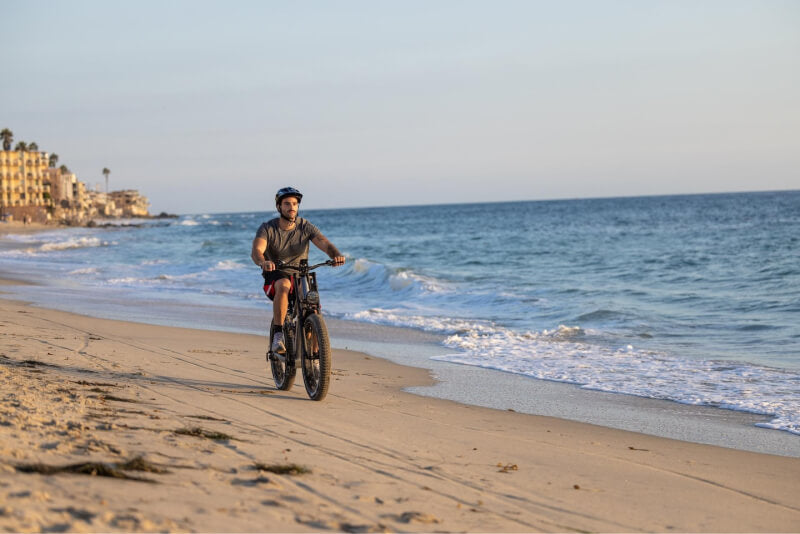
- Sand: Try riding a regular bike on a beach. You’ll go about three feet before the front wheel buries itself. A fat tire bike floats over soft sand because the wide tires spread your weight across a bigger area. It’s genuinely fun in a way regular biking on sand just isn’t.
- Snow: This is where fat bikes got their start. Regular tires sink and spin. Fat tires float on top. If you’ve ever wanted to keep cycling through winter, a fat tire bike makes it realistic.
- Mud: The thick, aggressive tread pattern on fat tires digs into muddy surfaces and finds grip where other tires slip out. If you ride through trails after rain, this matters a lot.
- Loose Gravel and Rocky Trails: Fat tire bikes handle bumpy, unpredictable surfaces with confidence. The wide contact area gives you traction and control even when the ground shifts under you.
- City Streets with Bad Roads: Potholes, cracked pavement, uneven curbs, fat tires absorb all of it. If your commute involves rough city streets, this can make a real difference in comfort.
Where Fat Tire Bikes Are NOT the Easiest Choice
Being honest here: fat tire bikes aren’t perfect for every situation.
- On smooth, paved roads: Fat tires have more rolling resistance than narrow tires. Rolling resistance is basically the friction between the tire and the ground. More tire on the ground means more drag, which means you have to push harder to go the same speed. On a flat road, a regular road bike will always feel faster and easier to pedal.
- Uphill climbing: Fat tire bikes are heavier than standard bikes, sometimes significantly so. Hauling that extra weight uphill takes more energy. It’s not impossible, but it’s a real workout.
- Tight turns and maneuverability: The wide profile of fat tires can make the bike feel a bit bulky in tight spaces. Sharp corners require a little more planning.
- Speed: If you need to get somewhere quickly, say, a daily city commute, a lighter bike will usually feel snappier and more efficient.
So fat tire bikes trade some speed and efficiency for better traction and stability. Whether that trade-off works for you depends entirely on where you ride.
Fat Tire Bikes for Beginners: Are They a Good Match?
Short answer: yes. A great match, actually.
Think about what makes biking scary as a beginner. Losing balance. Wheels slipping out. Feeling out of control. Fat tire bikes address all of those fears directly.
The wider tires make it easier to maintain balance, especially on surfaces that aren’t perfectly smooth. You feel planted. Secure. The bike doesn’t dart around unpredictably.
One cycling writer described it well: fat tires make you feel like you’re “floating” over surfaces where regular tires would bog down or skip out. That feeling of control builds confidence fast.
For beginners who feel nervous about tipping over, fat bikes are a game-changer. The wider stable platform helps riders learn faster and builds assurance over time.
If you’re a heavier rider, fat tire bikes also offer some specific advantages. If you’re looking for best fat tire mountain bikes built to handle more weight comfortably, there are solid options specifically designed for bigger riders.
How Tire Pressure Changes Everything
One of the most useful things to know about fat tire bikes is how dramatically tire pressure affects the ride.
Fat tires are designed to run at much lower pressure than regular bike tires. Here’s a quick breakdown:
- Regular road bike tires: 80–130 PSI
- Mountain bike tires: 25–35 PSI
- Fat tire bikes: 5–15 PSI
At low pressure (around 5–8 PSI), the tires become soft and squishy. They mold to the terrain beneath them, which is perfect for sand and snow. You get maximum traction and a smooth, floaty ride.
At slightly higher pressure (10–15 PSI), the tires firm up a bit. Rolling resistance drops. The bike feels more responsive and is better suited for packed trails or city riding.
Playing with tire pressure is one of the easiest ways to tune your fat tire bike for different conditions. Start around 10 PSI and adjust based on how the terrain feels under you. It doesn’t take long to find your sweet spot.
Fat Tire E-Bikes: Making It Even Easier
If you want all the benefits of a fat tire bike without the extra effort of pedaling a heavier machine, there’s an easy answer. Get a fat tire electric bike.
Electric fat tire bikes combine the traction and stability of wide tires with a motor that helps you pedal. The motor compensates for the added weight of the fat tire frame. Suddenly, hills flatten out. Headwinds disappear. You can ride farther with less fatigue.
For commuters, older riders, or anyone who hasn’t been on a bike in a while, a fat tire e-bike is often the most comfortable and accessible option out there.
The motor more than offsets the weight of the fat tire setup, making it feel genuinely easier than almost any other type of bike in challenging conditions. When you’re ready to invest in a good fat tire e-bike, it helps to start with reliable gear. For example, keeping your ride secure matters just as much, check out what to look for in a good fat tire e-bike lock before heading out on your adventures.

Credit: ride1up.com
Who Should Get a Fat Tire Bike?
Fat tire bikes aren’t for everyone, but they’re perfect for a specific group of riders. Here’s who tends to love them most:
- Beginners: The extra stability makes learning to ride, or getting back into riding, much less intimidating.
- Adventure and off-road riders: If you love exploring trails, beaches, or backcountry paths, fat bikes open doors that regular bikes simply can’t walk through.
- Winter cyclists: If you live somewhere with snow and you want to keep riding year-round, a fat tire bike is pretty much your only good two-wheeled option.
- Beach lovers: There is nothing quite like riding along the shoreline on fat tires. It’s genuinely one of the most enjoyable experiences in casual cycling.
- Heavier riders: Fat bikes are built tough, with sturdy frames and wide tires that distribute weight comfortably and safely.
- All-weather commuters: If your city has bad roads, potholes, or rough weather, fat tires handle it all without complaint.
- People with balance concerns: The wide platform is reassuring for anyone who feels unsteady on a narrow bike.
If you’re still trying to figure out whether the timing is right to get started, thinking about when the best time to go for a bike ride is can also help you plan your first outings around favorable conditions.
Practical Tips for Getting Started on a Fat Tire Bike
If you’re about to hop on a fat tire bike for the first time, here are a few things that’ll make the experience better right away:
- Start with lower tire pressure. Around 8–10 PSI gives you a forgiving, comfortable ride while you get used to how the bike handles.
- Use your gears. Fat tire bikes usually come with a wide range of gears. When heading uphill, shift to a lower gear early. Don’t try to muscle through it.
- Lean into the stability. Fat bikes feel different from regular bikes at first. They’re a little heavier, and the steering can feel slightly different. Give yourself a few rides to adjust. Most people fall in love with it within the first hour.
- Try different terrain. Once you’re comfortable, take it off-road. Even a simple dirt path will show you what fat tires are actually built for.
- Consider protective accessories. If you’re riding in wet or muddy conditions, quality fat tire bike fenders will keep mud and water from spraying all over you and your frame.
- Don’t forget to adjust the bike fit. Seat height matters on any bike. Make sure the seat is at a height where your legs have a slight bend at the bottom of each pedal stroke.
Frequently Asked Questions
Q1: Are fat tire bikes good for everyday use?
Yes, especially on mixed terrain or rough roads. They’re comfortable, stable, and great for year-round riding. However, for pure city commuting on smooth pavement, a lighter bike may feel easier to pedal.
Q2: Are fat tire bikes harder to pedal than regular bikes?
On smooth flat roads, yes, they require a bit more effort due to higher rolling resistance and added weight. But on soft, uneven, or loose surfaces, fat tires actually make pedaling easier by reducing slipping and providing better grip.
Q3: Can a fat tire bike ride on regular roads and pavement?
Absolutely. Fat tire bikes handle pavement just fine. They’re slower than road bikes, but they’re perfectly rideable on normal streets, bike paths, and city roads.
Q4: What PSI should I run in fat tire bike tires?
Fat tire bikes typically run between 5–15 PSI. Start around 8–10 PSI for general riding. Lower pressure (5–8 PSI) works best for sand and snow. Higher pressure (12–15 PSI) is better for hard-packed trails or pavement.
Q5: Are fat tire bikes good for heavy riders?
Yes. Fat tire bikes are often recommended for heavier riders. The wide tires distribute weight over a larger area, reducing pressure on any one point. The frames are also built for durability. Just make sure to check the bike’s rated weight capacity before buying. If you’re interested in exploring specific options, there are fat tire mountain bikes designed for bigger riders that are both durable and comfortable.
Final Thoughts
So, is a fat tire bike easier to ride?
For most riders, especially beginners, adventure seekers, and anyone riding on soft or rough terrain, the answer is a clear yes. The wider tires provide better balance, more grip, and a smoother ride over bumps and uneven ground. That translates directly into more confidence and more fun.
The trade-off is a bit of extra weight and higher rolling resistance on smooth pavement. But for the right rider, that’s a small price to pay for a bike that handles almost anything you throw at it. If you’ve been on the fence, the best way to know for sure is to take one for a test ride. Most people are surprised by how natural it feels, and how quickly they don’t want to go back to a regular bike.