So you’ve seen those cool bikes with super wide tires and you’re wondering: can I just put fat tires on my regular bike? This is one of the most common questions bike owners ask. Let’s break down everything you need to know about fat tires and whether your bike can handle them.
What Are Fat Tires Anyway?
Before we talk about putting fat tires on your bike, let’s understand what makes a tire “fat.”
Fat tires are much wider than regular bike tires. While a standard mountain bike tire is usually around 2 to 2.5 inches wide, fat tires are typically 3.8 inches or wider. Some fat tires can even be as wide as 5 inches. That’s more than double the width of a regular tire.
Think of it this way: if a regular tire is like a garden hose, a fat tire is more like a fire hose. There’s a lot more rubber making contact with the ground.
These wide tires were originally designed for riding on snow and sand. The extra width helps the bike “float” on soft surfaces instead of sinking in. But nowadays, people use fat tire bikes for all sorts of riding, from beach cruising to trail riding.
The Quick Answer: Can You Put Fat Tires on a Regular Bike?
Here’s the honest answer: in most cases, no. You probably can’t put true fat tires on a regular bike.
This isn’t great news if you were hoping for a simple tire swap. But understanding why this doesn’t work will help you find the best solution for your situation.
The main reason is simple: space. Your regular bike frame just doesn’t have enough room for those big, wide tires. It’s like trying to fit truck tires on a regular car. The parts just aren’t designed to work together.
Why Fat Tires Won’t Fit on Most Regular Bikes
Let’s explore the specific reasons why fat tires usually won’t work on your standard bike.
Frame Clearance Issues
Your bike frame has several tight spots where the tire needs to pass through. These include:
- The Chainstays: These are the metal tubes that run from your pedals to the rear wheel. On a regular bike, there’s usually only 2 to 3 inches of space here. A fat tire needs at least 4 to 5 inches.
- The Seat Stays: These tubes run from your seat down to the rear wheel. Again, regular bikes don’t have enough space for wide tires.
- The Fork: At the front of your bike, the fork holds the front wheel. Standard forks are designed for narrower tires and won’t accommodate fat tires.
Most regular mountain bikes can only fit tires up to about 2.6 inches wide. If you try to force a 4-inch fat tire into that space, it will rub against the frame. This rubbing can damage both your tire and your frame. It’s also dangerous because it can cause you to lose control while riding.
Rim Width Problems
Even if you somehow had enough frame clearance, there’s another big problem: rim width.
Your bike’s rims (the metal circles that hold the tires) need to match the tire size. A fat tire is designed to sit on a wide rim, typically between 65mm and 100mm wide. A standard bike rim is only about 20mm to 30mm wide.
If you try to mount a fat tire on a narrow rim, it creates what’s called a “lightbulb shape.” The tire bulges out dangerously at the top. This causes several problems:
- Sloppy, unpredictable handling
- Instability when turning corners
- Risk of the tire rolling off the rim completely
- Dangerous riding conditions
Think of it like trying to put a wide winter coat on a small hanger. It just doesn’t work properly.
Hub Spacing Differences
Here’s another technical hurdle: hub spacing.
The hub is the center part of your wheel where it attaches to the frame. Regular bikes use narrower hubs:
- Front hub: 100mm wide
- Rear hub: 135mm wide
Fat bikes need much wider hubs to support those big tires:
- Front hub: 135mm to 150mm wide
- Rear hub: 170mm to 197mm wide
Your regular bike frame simply isn’t built to accommodate these wider hubs. You can’t just swap in wider wheels without changing the entire frame.
Brake Compatibility
Your bike’s brakes might also be a problem.
If you have rim brakes (the kind that squeeze the sides of the wheel), they definitely won’t work with fat tires. The brake arms can’t reach around the extra-wide tire.
Even with disc brakes (which mount near the center of the wheel), the side knobs of fat tires can rub against brake components. While disc brakes give you better chances, they don’t automatically solve all the clearance problems.
Can You Put Wider Tires on Your Bike? Maybe
While true fat tires probably won’t work, you might be able to upgrade to slightly wider tires. This is good news because wider tires do offer some benefits.
How to Check What Will Fit
Here’s a simple way to measure if you have room for wider tires:
- Look at your current tire size. It’s printed on the side of the tire (something like “26 x 2.1” or “29 x 2.3”).
- Measure the clearance. Look at the narrowest point where your tire passes through the frame. Measure the space between the tire and the frame on both sides.
- Do the math. If you have 10mm of space on each side (20mm total), you could theoretically fit a tire that’s 20mm wider. However, always leave at least 4-6mm of buffer space for safety.
For example: If your current tire is 2.2 inches (56mm) wide and you have 10mm clearance on each side, you might be able to fit a 2.6-inch (66mm) tire. That’s a noticeable upgrade, even if it’s not a true fat tire.
Mid-Fat or Plus-Size Tires: The Middle Ground
If you want more grip and cushion but can’t fit fat tires, consider “plus-size” or “mid-fat” tires. These range from 2.8 to 3.0 inches wide.
Many modern mountain bikes can fit plus-size tires. They offer a nice balance between the agility of regular tires and the traction of fat tires. You get:
- Better grip on loose terrain
- More comfort over bumps
- Improved traction in mud and snow
- Less weight than full fat tires
Plus-size tires are like the “goldilocks” solution—not too narrow, not too fat, but just right for many riders.

Credit: www.youtube.com
What About Converting to Fat Tires? Is It Possible?
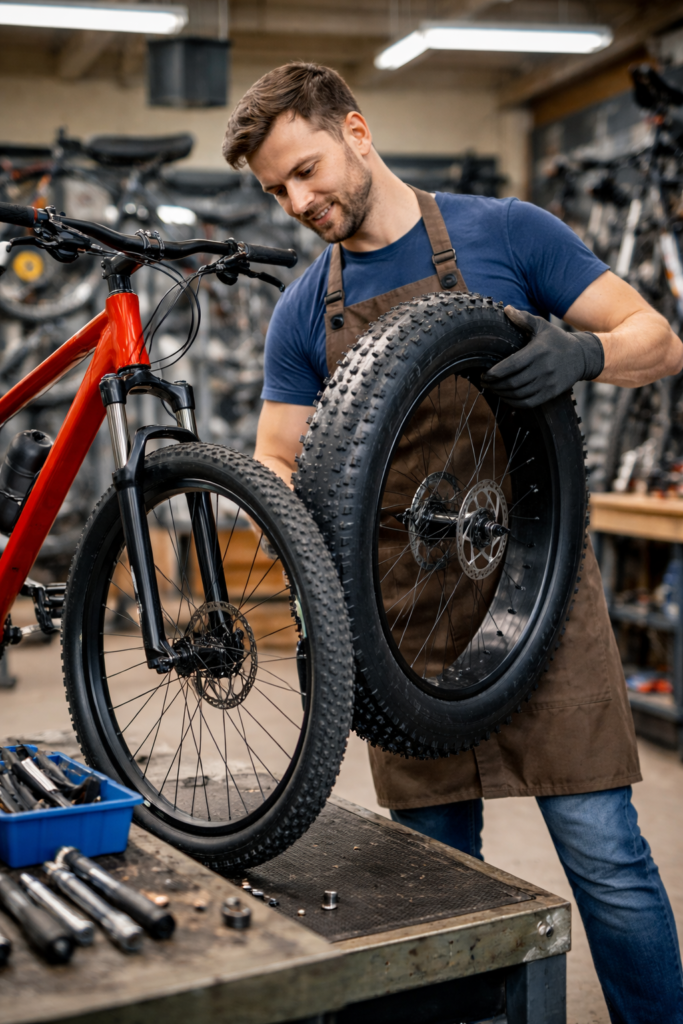
Some people wonder if they can convert their regular bike to accept fat tires by changing components. While technically possible, it’s rarely practical or cost-effective.
What You’d Need to Change
To truly convert a regular bike for fat tires, you’d need to replace:
- The frame – Because the existing frame won’t have enough clearance
- The fork – Standard forks can’t accommodate fat tires
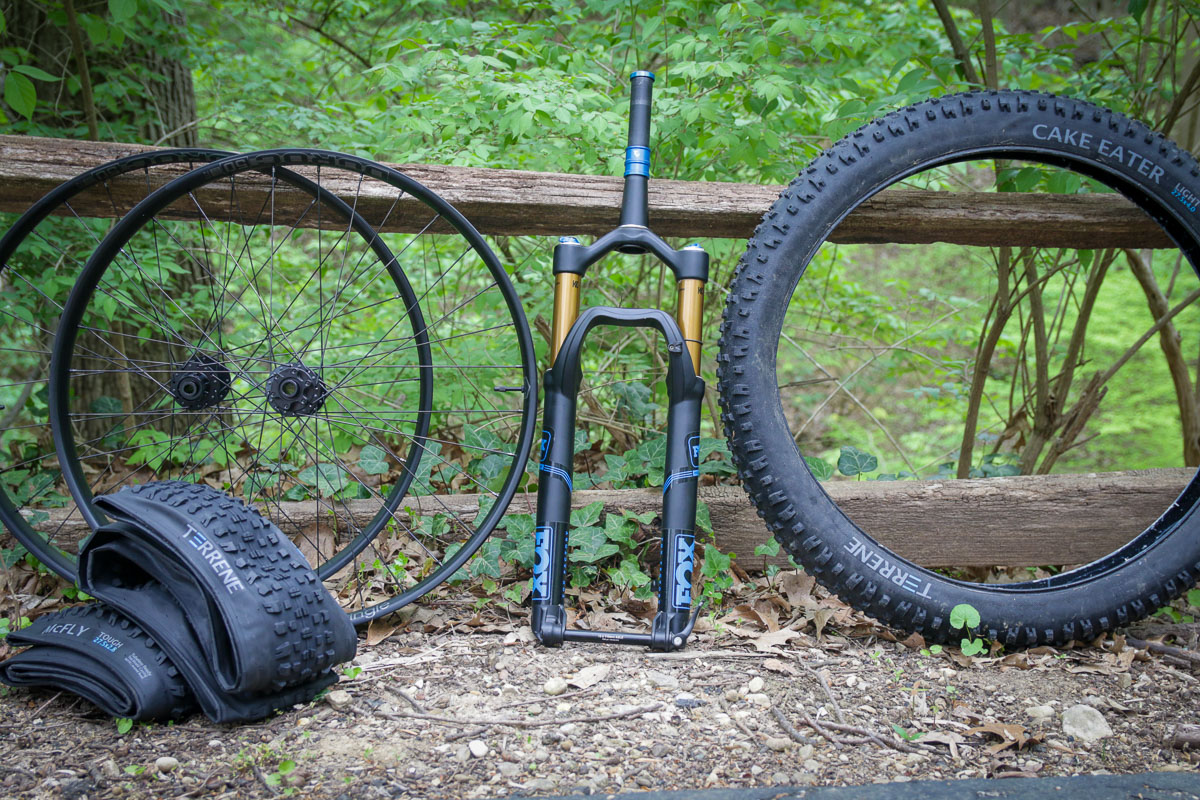
- The wheels – Both rims and hubs need to be much wider
- The brakes – Likely need to upgrade to disc brakes
- The drivetrain – May need adjustments for the wider setup
By the time you’ve replaced all these parts, you’ve essentially bought a whole new bike. The cost would be similar to just buying a purpose-built fat bike.
When Conversion Makes Sense
There are very few situations where conversion is worthwhile:
- You have a high-end bike frame that’s worth preserving
- You’re a skilled bike mechanic who can do the work yourself
- You already have some compatible fat bike components
- You enjoy custom bike projects as a hobby
For most people, it makes more sense to keep your regular bike and buy a separate fat bike if you really want one.
The Benefits of Fat Tires (What You’re Missing Out On)
Understanding what fat tires offer helps you decide if it’s worth getting a dedicated fat bike.
Superior Traction
The wide surface area of fat tires means more rubber touches the ground. This gives you better grip on:
- Loose gravel
- Sandy beaches
- Snowy trails
- Muddy paths
- Rocky terrain
It’s like the difference between walking on ice in regular shoes versus boots with good tread. More surface contact equals more control.
Enhanced Comfort
Fat tires run at very low air pressure—sometimes as low as 5 to 15 PSI (pounds per square inch). Compare that to regular mountain bike tires that run at 25 to 40 PSI.
This low pressure means the tires can squish and absorb bumps. It’s like having built-in suspension. You’ll feel fewer jolts when you ride over roots, rocks, or rough pavement.
Year-Round Riding
Fat bikes were originally designed for winter riding. The wide tires help you ride through snow that would stop a regular bike cold.
But they’re not just for winter. People use fat bikes in summer for:
- Beach riding (they don’t sink in sand)
- Desert trails
- River crossings
- Muddy conditions
If you live somewhere with extreme weather or varied terrain, a fat bike extends your riding season.
Stability and Confidence
The wide stance of fat tires makes the bike feel more stable. This is especially helpful for:
- Beginning riders who are still building confidence
- Kids learning to ride
- Riding on unstable surfaces
- Anyone who wants a more relaxed, stable ride
That stability can make you a braver rider because you trust the bike more.
Credit: bikerumor.com
The Downsides of Fat Tires (The Other Side of the Story)
Fat tires aren’t perfect for every situation. Here are their limitations:
They’re Heavy
All that extra rubber adds weight. A fat bike typically weighs 3 to 5 pounds more than a similar regular bike. This makes:
- Uphill riding more challenging
- Lifting and transporting your bike harder
- Acceleration slower
- General pedaling more effortful
If you’re used to a lightweight bike, the extra weight takes some getting used to.
Slower on Pavement
Fat tires are designed to grip loose surfaces. On smooth pavement, this becomes a disadvantage. The aggressive tread pattern creates more rolling resistance.
This means you have to pedal harder to maintain the same speed. If your main riding is commuting on paved roads, fat tires will slow you down and wear you out faster.
More Expensive
Fat tires cost more than regular tires because they use more material. Expect to pay:
- $50-$150 per tire (regular tires cost $30-$80)
- More for replacement tubes
- Higher costs for other fat bike-specific parts
The entire fat bike is also more expensive due to the specialized frame, fork, and components.
Maintenance Requirements
Fat tires need more attention to tire pressure. Because they run at such low pressure, even a small change affects how the bike rides.
Too much pressure: The ride becomes harsh and you lose traction Too little pressure: You risk damaging the rims and getting pinch flats
You need to check and adjust pressure more frequently than with regular tires.
Fat Bike vs. Regular Bike: Which Should You Choose?
If you’re shopping for a new bike, here’s how to decide between fat and regular tires.
Choose a Fat Bike If:
- You ride in snow, sand, or mud regularly
- You want maximum traction and stability
- Comfort is more important than speed
- You enjoy exploring off the beaten path
- You ride in varied, challenging terrain
- You want one bike that handles all weather conditions
Choose a Regular Bike If:
- You mostly ride on paved roads or smooth trails
- Speed and efficiency matter to you
- You want a lighter, more responsive bike
- You do a lot of uphill climbing
- You’re on a tighter budget
- You prefer a more traditional cycling experience
Consider a Plus-Size Tire Bike If:
- You want something between regular and fat
- You ride mixed terrain (pavement and trails)
- You want more comfort than regular tires offer
- You don’t need extreme fat bike capabilities
- You want better efficiency than full fat tires
Many people find that a regular mountain bike with slightly wider tires (2.6 to 3.0 inches) gives them the best of both worlds.
Alternative Solutions: Getting Fat Tire Benefits Without a Full Fat Bike
If you can’t or don’t want to put fat tires on your bike, here are some alternatives:
Option 1: Lower Your Tire Pressure
You can make your existing tires feel cushier by running them at lower pressure. Experiment with dropping the PSI by 2-5 pounds and see how it feels.
Just don’t go too low or you’ll risk pinch flats. Find the sweet spot where you get comfort without compromising safety.
Option 2: Add Suspension
If your bike doesn’t have suspension, adding a suspension fork or seat post can greatly improve comfort. This mimics some of the cushioning effects of fat tires.
Option 3: Upgrade to Wider Regular Tires
As we discussed earlier, you might be able to fit slightly wider tires. Going from 2.1 inches to 2.4 or 2.6 inches makes a noticeable difference in comfort and traction.
Option 4: Get a Second Bike
If you love your regular bike but want to try fat biking, consider keeping both. Use your regular bike for most riding and rent or buy a fat bike for special adventures.
Many riders find that having specialized bikes for different purposes gives them the best overall experience.
Frequently Asked Questions Of Can I Put Fat Tires On A Regular Bike
Q: Can I put 3-inch tires on my regular mountain bike?
It depends on your specific bike frame. Most regular mountain bikes can fit tires up to 2.6 inches, but some newer models with “boost spacing” can accommodate 3-inch tires. Measure your frame clearance carefully before buying new tires.
Q: Will fat tires make my bike faster?
No. Fat tires are slower on pavement and smooth trails due to increased rolling resistance and weight. However, they can be faster on loose, rough terrain where the extra traction helps you maintain momentum.
Q: Do I need special rims for fat tires?
Yes. Fat tires require rims that are 65mm to 100mm wide, much wider than standard rims. You cannot safely mount fat tires on regular narrow rims as it creates a dangerous “lightbulb” shape.
Q: Can you put regular tires on a fat bike?
Technically possible but not practical. The fat bike frame is designed for wide tires, so regular narrow tires would look odd and wouldn’t fit properly on the wide rims. It’s better to use the right bike for your intended riding.
Q: Are fat bikes good for beginners?
Yes. Fat bikes offer excellent stability and traction, which builds confidence for new riders. The forgiving nature of the wide tires makes it easier to maintain balance on varied terrain.
Final Thoughts: Making the Right Decision for Your Riding
The simple truth is that fat tires probably won’t fit on your regular bike. The frame, fork, rims, hubs, and brakes aren’t designed for them. Trying to force fat tires onto a regular bike is unsafe and impractical.
However, you do have good options:
- Upgrade to slightly wider tires within your frame’s limits
- Consider plus-size tires (2.8-3.0 inches) if your frame allows
- Buy a dedicated fat bike if you really want the full fat tire experience
- Optimize your current setup with better tire pressure and maintenance
Remember, the best bike is the one that matches your riding style and the terrain you actually ride. A regular bike with properly sized tires will always perform better than a mismatched setup.
If you’re curious about fat bikes, many bike shops offer demo days or rentals. Try before you buy to see if the fat bike experience is worth the investment for your riding needs.
Whatever you decide, ride safe and have fun out there!